On Film

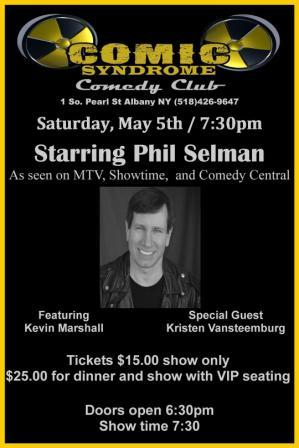
THIS WEEKEND: Performing at Comic Syndrome, Donate to the Hero Initiative

May 4, 2012
By

REMINDER:

Facebook event page

====================

Also, if you’re going to see “The Avengers,” consider making a matching donation to The Hero Initiative to help offset the injustice being done to Jack Kirby.

If You’re Going to see The Avengers This Weekend, I Have a Challenge for You

May 1, 2012
By

Hey folks. In case you didn’t know, there’s a little movie coming out called “The Avengers.”

As much as my inner dork (which I hate talking about because it’s really not any different from any other type of fandom it’s just been given a pedestal it doesn’t deserve by marketers) wants so badly to part with my hard-earned money to see The Hulk smash things while Iron Man flies around and Cap throws his shield and Thor throws his hammer and Hawkeye shoots arrows and we pretend it’s not ridiculous that he’s a part of this group and ditto for Black Widow, I have a moral conundrum.

Marvel’s poor treatment of Jack Kirby and his family’s estate in light of all he did for the “House of Ideas” is well documented. Really, the only reason Marvel gets as much of a pass as it does is because they’re not as awful as DC Comics has been to Siegel and Shuster and their respective estates. Stan Lee gets all the credit because he made a sweet deal with them and was a good talker. Kirby, on the other hand, was always a bit of a quiet guy. Raised in the inner-city with a hard-nosed work ethic, he shied away from attention and praise. It cost him dearly. Because even though he was probably more responsible for shaping Marvel and superhero comics as a whole than any other creator, Kirby’s name doesn’t appear on anything.

It won’t be anywhere in the credits for “The Avengers.” And that bothers me.

But as Robot 6 reports…

Fortunately, Jon Morris has an awesome solution. “So how about this?” he writes. “You’re probably going to go see The Avengers and, judging by the early reviews, you’ll probably enjoy it. How about — as a thank you to the creators who brought you these characters in the first place, who gave you something to enjoy so much — you match your ticket price as a donation to The Hero Initiative?”

Perfect.

http://www.heroinitiative.org/

The Hero Initiative was created to combat just this sort of injustice. From their website:

The Hero Initiative is the first-ever federally chartered not-for-profit corporation dedicated strictly to helping comic book creators in need. Hero creates a financial safety net for yesterdays’ creators who may need emergency medical aid, financial support for essentials of life, and an avenue back into paying work. It’s a chance for all of us to give back something to the people who have given us so much enjoyment.

So here’s the challenge: make a donation to the Hero Initiative matching the cost of your ticket to “The Avengers”. Or, Hell, double it! While Marvel, Stan Lee, and the others rake in all the money with fake heroic exploits, you can make a real one. While actors play pretend at saving lives, you will be doing the real thing.

So. You in?

So long, Davy Jones

February 29, 2012
By

Davy Jones has died from a heart attack. He was 66.

One of my first obsessions with any television show was “The Monkees.” I think it was either VH1 or MTV (or both) that showed them incessantly at one point in the 1980s after it was found that Baby Boomers were finally old enough to feel and crave nostalgia. The show was perfect fodder for a child whose father was rearing him on The Beatles, combining fun and kitsch with genuinely great songwriting.

Of course, I was too young at the time to know or even listen to the cynical explanation of The Monkees as a crass commercialization of sixties culture. As I got older, the uber-cynical part of me actually embraced The Monkees through what some would see as the contrarian view that the project was no more manipulative or exploitative than most other acts from that era. If anything, one could argue they were in a very real way a bit more transparent than many of their “legitimate” contemporaries, in that while Mickey Dolenz aped being able to play the drums, they didn’t pretend to be anything they weren’t.

Then there was “Head.”

I actually didn’t see “Head,” The Monkees’ move to the big screen after the cancellation of their television show, until I arrived home at some absurd hour one weekend when I was 19 and turned on Turner Classic Movies. I’d never heard of it, even, and as I watched I kept mumbling to myself (in-between continued solitary imbibing) “what on Earth?” I woke up the next morning determined to see it again, but sober. It took eight years but it finally happened.  I adored how absurd yet honest it was. The film, co-written and co-produced by Jack Nicholson and Bob Rafelson, alternately lampooned and grappled with The Monkees’ role as corporate pitchmen with dadaist humor that went off the rails of the narrative but never became pretentious. It was self-aware but gorgeous, as shown in the video above (“The Porpoise Song.”).

It also highlighted the oft overlooked talents of the group, especially Davy Jones. What an incredible performer he was: charismatic, engaging, genuinely likable. He was such a small guy physically, but carried such a tremendous presence with him. And that voice! One of the things I’ve always felt but don’t think I’ve ever seen expressed is how earnest and believable he was when singing those songs. Of course it helped that he had people like Neil Diamond writing them (though fellow Monkee Michael Nesmith also wrote some tremendous stuff for them), but only Davey could have made the whole thing work.

The news of Davy Jones’ death legitimately bummed me out when I read it. So long, kid.

Oscar – harkening back to yesteryear with rose-tinted glasses and blackface

February 27, 2012
By

The Academy Awards have never been stalwart protectors of fine art, but it seems to have degraded and become more shameless over time, particularly with its penchant for rewarding films that have little to no artistic merit or message other than being “a love letter to movies.” As if the inundation of montages for the sake of montages weren’t bad enough, we now have awards given to films that say only “movies were great and still are.” The Academy has become an old man, his left hand pressed against the looking glass while furiously masturbating with his right hand, squinting so that he can remember what he used to look like. In short, nearly obscene and absurdly pathetic.

The worst, though, was Billy Crystal rolling out his blackface Sammy Davis, Jr. routine that I’m still trying to figure out how he got away with in the eighties (I figure it might have something to do with the fact that the rest of the all-white Rat Pack would beat up on Sammy with racist jabs while others disowned his blackness because of his Jewish conversion). But in 2012, it’s every bit as inexcusably ignorant and stupid under the guise of false context as the second appearance of the racist African jungle men in this year’s Best Picture winner “The Artist.”

Comedian Paul Scheer put it best when Octavia Spencer won the Best Supporting Actress award for “The Help,” tweeting “Octavia Spencer’s win shows just how far we’ve come since Billy Crystal performed in Blackface.”

Yes, this year’s Oscars telecast did harken back to yesteryear. For all the wrong reasons.

More anti-love for “The Artist”

February 21, 2012
By

Looks like I’m not the only one that’s a bit perturbed at the adulation “The Artist” has received this awards season. From film critic Jeffrey Wells’ Hollywood Elsewhere blog:

I’m trying not to pay too much attention to this or give it too much weight, but when I do think about it I get a little bit sick. It’s 1953 all over again, and we’re about to give the Best Picture Oscar to The Greatest Show on Earth.

The Artist is a 2011 version of That’s Entertainment! in a silent, black-and-white mode with a strong narrative assist from A Star Is Born and Singin’ in the Rain.

Echoes a lot of my feelings on the film. Charming? Sure. But it’s way too derivative, twee, and self-congratulatory (not to mention a bit backwards and weird in its romantic themes) to warrant “Best Picture” consideration.

It’s popcorn. Nice to have at a theater, but not something I’d dare accept as a substitute for sirloin.

Previously: on French nostalgia for Western film and zombies

on French nostalgia for Western cinema and zombies

February 13, 2012
By

I saw “The Artist” last night. Honestly, I wanted to hate it, and my first reaction (which got me booed by my friends Maeve and Steve who went with me) was “best children’s movie of the year!”

After a day to digest it and wash off the shitty mood I was in all weekend, I came around to liking it a lot more. The cinematography was gorgeous, and of course Dujardin is a masterful mime. But I couldn’t help but feel a pinge of cynicism when re-reading all the stratospheric praise the film received. Like many actors in Hollywood, it was incredibly charming and pretty, but like those same actors, that alone doesn’t make it brilliant and unique.

Read more »

My unfair, ridiculously premature evaluations of films on Hollywood’s Black List

December 13, 2011
By

For those who don’t know, Hollywood’s “Black List” is an annual compilation of the hottest/best unproduced screenplays in Hollywood. Deadline has the full list, and the Times Union’s CJ Lais shares his thoughts here.

My thoughts on the Top Ten, which are wholly premature and/or unfair:

1. THE IMITATION GAME by Graham Moore.
A biopic of British World War II cryptographer Alan Turing, who cracked the German Enigma code. He later kills himself after being arrested as a homosexual.
THOUGHTS: Turing’s story is one that’s ripe for a biopic and is, fittingly seeing as how it tops the list, the hands down most intriguing of all the screenplays on this year’s List.

2. WHEN THE STREET LIGHTS GO ON by Chris Hutton & Eddie O’Keefe.
An 80′s-set story of a town dealing with the murder of a high school girl and her teacher.
THOUGHTS: The synopsis reads like a prototypical film grad treatment.

3. CHEWIE by Evan Susser and Van Robichaux.
Seven-foot tall Peter Mayhew is the protagonist.
THOUGHTS: This sounds like garbage. Typical masturbatory geek bullshit; the kind of thing that will get praise and excitement from blogs and websites devoted to the Comic Con crowd and be heralded as the type of thing that should be more successful and/or should get a wider release despite its objectively poor quality.

4. THE OUTSIDER by Andrew Baldwin.
A former U.S. prisoner of war rises in the criminal underworld of post-World War II Japan.
THOUGHTS: I think I have a new favorite movie that’s never been produced. It’s a setting rarely tackled in contemporary North American cinema and one that’s ripe for intrigue (see Akira Kurosawa’s work from the period). I love me some noir. Let’s do this shit.

5. FATHER DAUGHTER TIME: A TALE OF ARMED ROBBERY AND ESKIMO KISSES by Matthew Aldrich
A man and his 11-year-old daughter go on a three-state crime spree.
THOUGHTS: Remember “A Perfect World”? Apparently The Black List doesn’t. Or does and just thinks it’ll work again.  Read more »

“Anonymous” and why we shouldn’t carry water for a theory that doesn’t hold it

October 31, 2011
By

The Shakespeare controversy, which emerged in the 19th century (at that time, theorists proposed that Francis Bacon was Shakespeare), was one of the origins of the willful ignorance and insidious false balance that is now rotting away our capacity to have meaningful discussions. The wider public, which has no reason to be familiar with questions of either Renaissance chronology or climate science, assumes that if there are arguments, there must be reasons for those arguments. Along with a right-wing antielitism, an unthinking left-wing open-mindedness and relativism have also given lunatic ideas soil to grow in. Our politeness has actually led us to believe that everybody deserves a say.

The problem is that not everybody does deserve a say. Just because an opinion exists does not mean that the opinion is worthy of respect. Some people deserve to be marginalized and excluded. There are many questions in this world over which rational people can have sensible confrontations: whether lower taxes stimulate or stagnate growth; whether abortion is immoral; whether the ’60s were an achievement or a disaster; whether the universe is motivated by a force for benevolence; whether the Fonz jumping on water skis over a shark was cool or lame. Whether Shakespeare wrote Shakespeare is not one of these questions.

Yes, yes, a thousand times yes. Climate change skeptics do deserve to get told that their theories are unsound. Truthers propounding the idea that 9/11 was an inside job deserve to be told “yes, and bin Laden just took credit for it because he was bored, you twit.”

Enough with fake fairness, folks. As Marche points out, there are times when you can have a debate and times when you can say “that is so stupid it doesn’t deserve mention. Except wait, no, it does deserve mention. I am mentioning it right now so that I can tell you how stupid that is. Now be quiet. Adults are talking.”

During shooting of "Anonymous," Rhys Ifans often had to avoid a fellow actor who was convinced Obama was born in Kenya and wouldn't shut up about it.

It’ll be easy enough to judge the film on its own merits once I see it, and all indications are that I will enjoy it immensely. However, that’s going to require me to treat it as a work of fiction rather than a conversation starter, which is exactly what Emmerich and the film’s producers have been purporting in the film’s marketing and even in interviews with legitimate press. They act convinced, even though I suspect they know full well that the theory is bunk and not worth nearly as much as the artistic and creative energies put into making the film itself.

But with all that, I think Patton Oswalt put it best in an unrelated rant off his latest album:

“Hey, you have to respect everybody’s beliefs.” No you don’t! That’s what gets us in trouble. You have to—look, you have to acknowledge everyone’s beliefs. And then you have to reserve the right to go ‘that is fucking stupid. Are you kidding me?’ I acknowledge you believe that, that’s great, but I’m not gonna respect it. We have an Uncle who believes he saw Sasquatch. We do not believe him, nor do we respect him. “

Oswalt’s latest album, Finest Hour, is available now. Get it via mp3 or via mp3.
Read the rest of the article from Stephen Marche, himself an expert on Shakespeare. And please, for God’s sake, never mistake Hollywood for history or bally-hoo for belief.

Film reviews: “Moneyball” and “Drive”

October 3, 2011
By

Note – my ratings, which are as arbitrary as any other and as such should probably not be obsessed over, are done on a scale of one to five stars.

MONEYBALL
****1/2

Director: Bennett Miller
Starring: Brad Pitt, Jonah Hill, Philip Seymour Hoffman, and Chris Pratt

DRIVE
****

Director: Nicolas Winding Refn
Starring: Ryan Gosling, Carey Mulligan, Ron Perlman, Bryan Cranston, and Albert Brooks

On the surface, the two films I saw this weekend bore little resemblance to each other. In fact, one wouldn’t even place them in the same genre. “Moneyball,” based on the best-seller from financial reporter and non-fiction writer Michael Lewis, tells the story of baseball general manager Billy Beane and his revolutionary approach to scouting and player evaluation that made a ball club with one of the lowest payrolls in Major League Baseball into perennial contenders. “Drive,” based on a 2005 novel by James Sallis, is a heist film based around an assuming, anonymous character (we never do learn his name).

Yet they mirror each other in many other ways. Both focus on male protagonists engaged in pursuit of redemption. They maintain a cool and calm veneer for others, but explode in acts of rage and violence. With Billy Beane, the outbursts don’t cost someone the use of their hands or their head, but they do include him destroying a clubhouse with a baseball bat and terminating the employment of players, scouts, and coaches when they don’t follow the plan he’s laid out for them.

The films also carry thematic similarities. Both are character studies that explore the ethical murkiness of the respective protagonists. Beane is ultimately doing the right thing for baseball and the Athletics organization in particular, dragging baseball kicking and screaming into the twenty-first century and making a small team with a loyal fanbase competitive with teams like the Yankees and the Red Sox. Yet we learn early on that there is a concession that must be made with this approach: if players are numbers, one must be able to remove them from the equation without hesitation if they don’t fit. The Driver (as he is noted in the film’s credits) resides in a world where crime is both a profession and a past-time. He’s attempting to better himself and helps his new neighbor out of affection for her and her child. But they, too, are caught up in a world where knives and guns are as common as forks and knives, they just don’t realize it until it’s thrust in front of them in violent fashion.

As such, “Moneyball” and “Drive” rely heavily on moral relativism to sustain empathy for the protagonists. Their destructive actions permanently injure lives and end them (career-wise and literally, respectively). These aren’t concessions that are made along the journey; they are requisites in order to fix the situations both have found themselves entrenched in.

They’re also remarkably quiet movies. The best moments for Brad Pitt (Beane in “Moneyball”) and Ryan Gosling (the Driver in “Drive”) come when they don’t say a word and barely move. The camera makes us sit with them and think, and through their performances they guide us through their respective thought processes. The directors (Bennett Miller of “Moneyball” and Nicolas Nicolas Winding Renf of “Drive”) have made reflective and simply gorgeous films. Their education and experience are separated by an ocean: Miller is an American filmmaker, Refn is Danish. Yet they share the same Danish sensibilities that perfectly meld art and escapism, like romantic poetry with a club beat behind it.

I haven’t seen two films this year more different than “Moneyball” and “Drive,” nor have I seen two films that share such remarkable similarities. More importantly, though, I also haven’t seen two films better than either. Both deserve your attention and transcend their genres to give us something that’s engaging, thoughtful, and beautiful, in spite of all the baseball and head-bashing.

Steven Spielberg: the anti-Lucas

September 19, 2011
By

"Stop or I'll communicate wirelessly with my contemporaries!" After nine years of complaints and controversy, the walkie talkies are being taken out and government agents re-armed in the classic film "ET"

While George Lucas was busy fiddling with the Blu-Ray “Star Wars” compilation and inserting more garbage that ruins childhood memories, director Steven Spielberg was undoing a similarly infamous edit of “E.T.” for its Blu-Ray release.

From BlackBook.com:

For the 2002 re-release of E.T., Steven Spielberg digitally replaced all the FBI agents’ guns with walkie-talkies. He never really explained why, but many assumed he was bowing to political correctness and concerned parents’ groups. Fortunately, as Yahoo! reports, he announced he will reverse the change for the upcoming Blu-Ray release of E.T.

What was a silly change done for even sillier reasons has finally been righted.

Now if we can only get Darth Vader to stop whining post-mortem…